Cold, Windy, Beautiful: A Night on Mt. Rainier
A time lapse of the Milky Way’s dance around Mt. Rainier - July, 2020.
“Friendship is unnecessary, like philosophy, like art.... It has no survival value; rather, it is one of those things which give value to survival.”
― C.S. Lewis
Having a friend to do photography with is a wonderful thing. This story is about my buddy Michael Goodwin and I braving the cold, the wind, and the rock pillows on Mt. Rainier just to get a shot of the Milky Way.
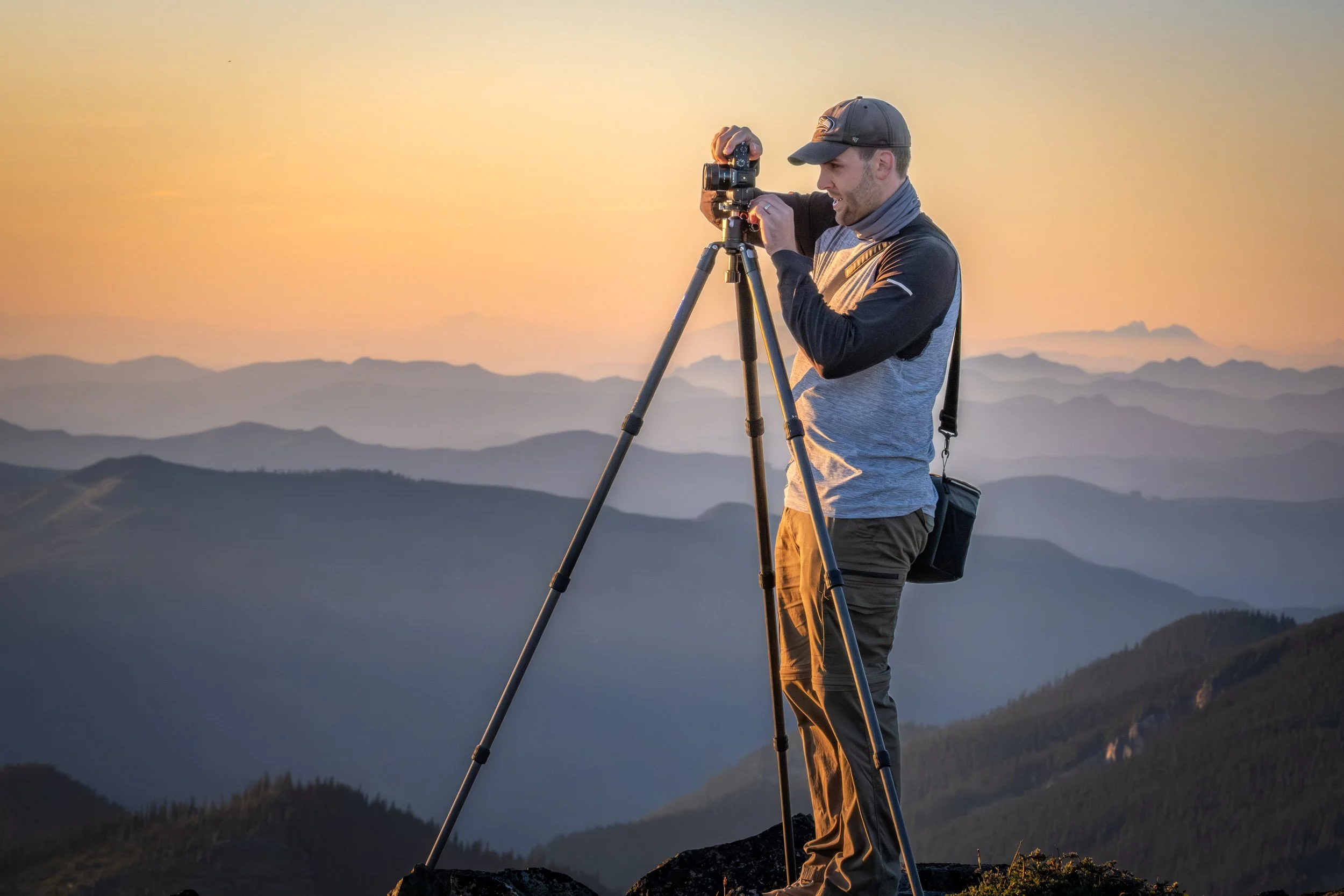
Michael Goodwin Photography bathed in golden hour light - July, 2020.
It was July of 2020, and the road to Sunrise had just opened. Sunrise is my favorite entry point to Mount Rainier National Park. At an elevation of 6,400 feet (1,950 m), it is the highest point you can drive to within the park. Once you make the drive up the winding 17-mile road, the mountain smacks you across the face with its enormous majesty!
Mike and I both love to shoot the night sky, so we planned an evening excursion to the Mount Fremont Lookout Tower. We have a similar mind about these types of photo shoots: if we’re staying up most of the night for photos, we might as well get there early to shoot sunset, and stay late to shoot sunrise. A triumphant trifecta!
The trail to the former fire lookout is a popular one. It has a roundtrip length of 5.6 miles (9 km) and an elevation gain of 1,200 feet (366 m). We met in the parking lot in late afternoon; gear packed and ready to hit the trail!
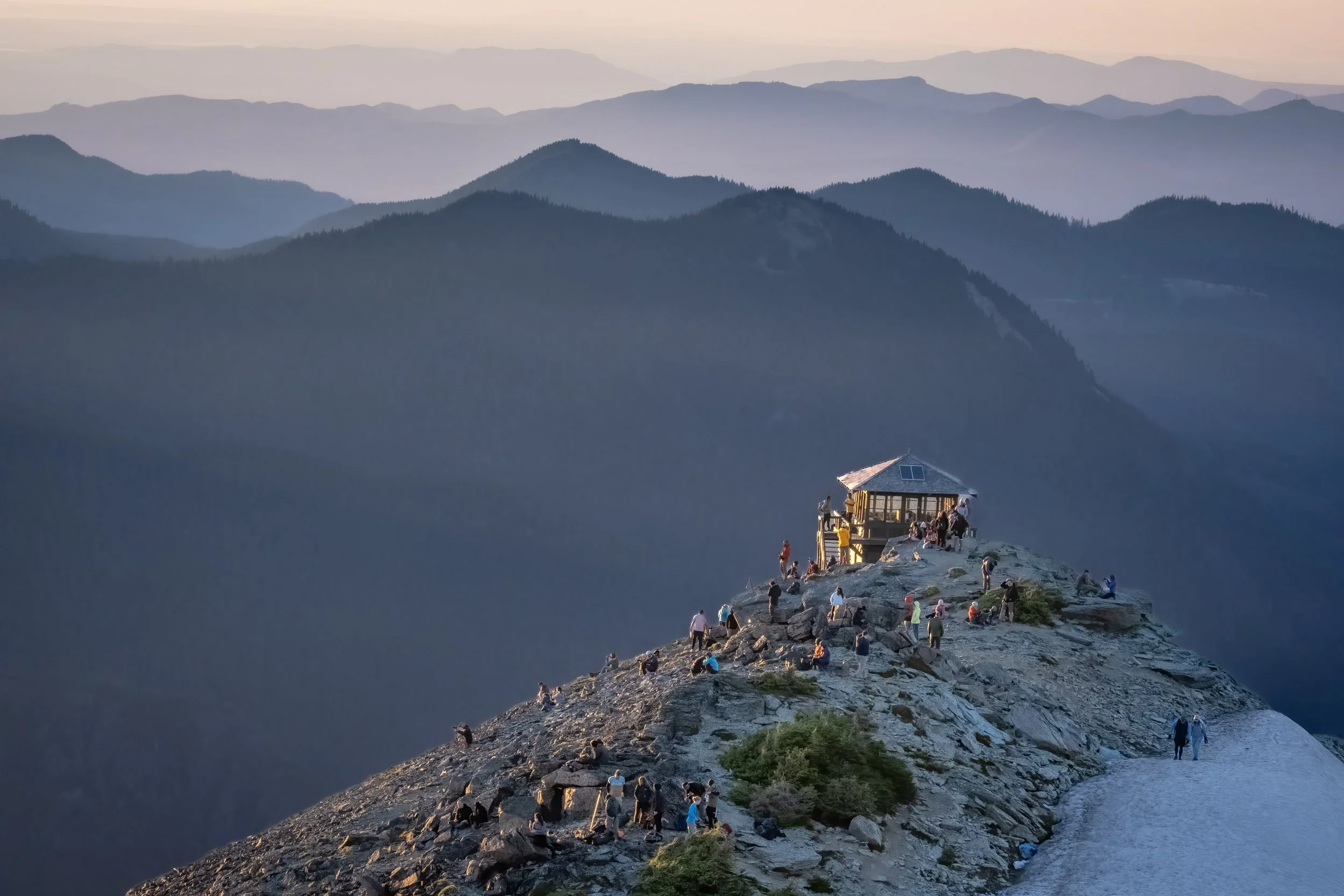
Mount Fremont Lookout Tower - July, 2020.
The initial climb from Sunrise gets my heart rate up and my lungs gasping. After that, it’s a fairly even trail until a steady incline for the last .75 miles (1.2 km). I had familiarity on the trail since I had done this same thing in 2017.
3 years earlier, I shared the sunset with about a dozen people, and I was the only one to stay overnight. 2020 was a very different story. There were 80-100 people at sunset, and at least 3 dozen spent the night. It was a perfect storm of conditions to draw that large of a crowd: there was nothing else to do because of COVID, the weather was good, the C/2020 F3 (NEOWISE) comet was in the sky, and the moon was new.
Upon arriving at this veritable human zoo, Mike and I decided to see if we could find a good vantage point that wasn’t in the sea of people. We chose to climb an outcropping of rock a couple hundred feet higher, and about 200 yards east of the tower. Often times while scouting a location for a good vantage point you have to try more than a few spots to get it right. Luckily, we found our home for the night on the first try.
Getting to the location early allowed us ample time to hang out and try different possible compositions. However, when golden hour hits and the light gets good, ideas change to embrace the moments you weren’t anticipating. As the sun started to descend, the best views were found to the west, and did not include Mount Rainier.
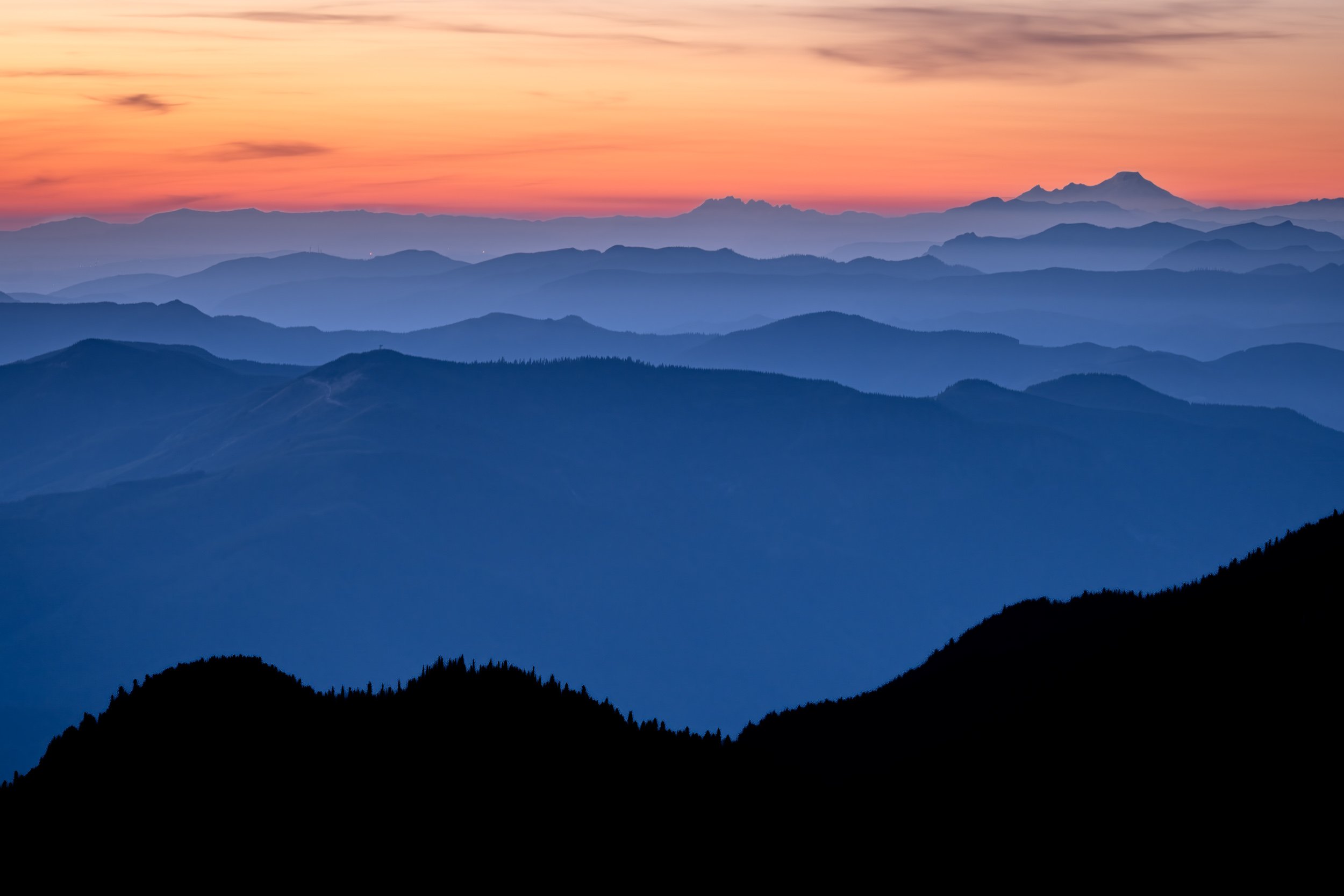
Looking west over the cascade mountains at sunset - July, 2020.
After the sun went down, we played the waiting game until complete darkness. I’ve learned a lot more about the patterns of the sun and the moon due to photography. For instance, the darkest part of the night we were out only lasted about 3 hours. This might not mean a whole lot to the average person, but it does to a photographer looking for dark skies!
As night drew in, C/2020 F3 (NEOWISE) became a bright streak in the western sky. This was the best comet viewing I’ve had in my life. It was just another element that added a special quality to the evening. After getting some photos of C/2020 F3 (NEOWISE), it was time to attempt some shut-eye!
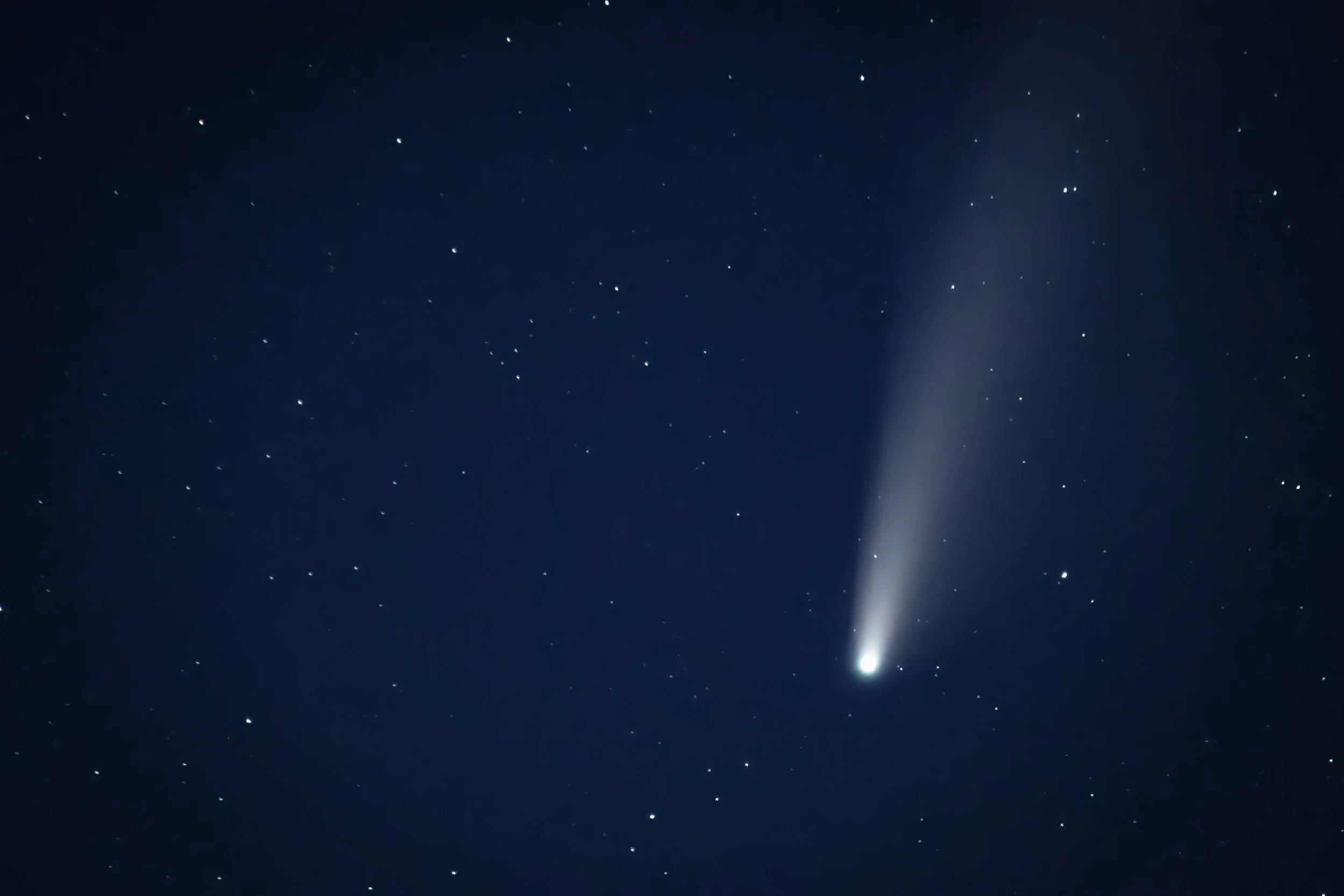
C/2020 F3 (NEOWISE) - July, 2020.
For anyone who has never spent much time in the high country, the weather can be inhospitable even at the height of summer. I typically expect temperatures to be around 10-20 degrees cooler during the day and falling further at night. If there is any wind, it can feel another 10+ degrees colder. Storms can happen at any time due to the mountainous terrain. Being prepared for any conditions is a wise place to start.
For some unknown reason, I keep getting older every year and my body has begun to show its age a bit. As a result, I try to take as little gear with me as possible. This can definitely affect comfort on a night in the mountains.
Mike and I both took minimal provisions with us on the night in question, and we paid the price. The late afternoon and early evening were clear and calm, but the story changed as darkness fell. We avoided any rain or snow, but all of a sudden we were hit in the face by 20 mph winds! Combine that with the already 40-degree air temperature, and we were in for a long night.
Perched on top of a large mound of rock with no coverage was a horrible place to try to escape the biting winds. We tried and failed to find a corner of less torture. Eventually, we both settled on our respective beds of volcanic rock. I shut my eyes for a brief time that night, but sleep was not in the cards.
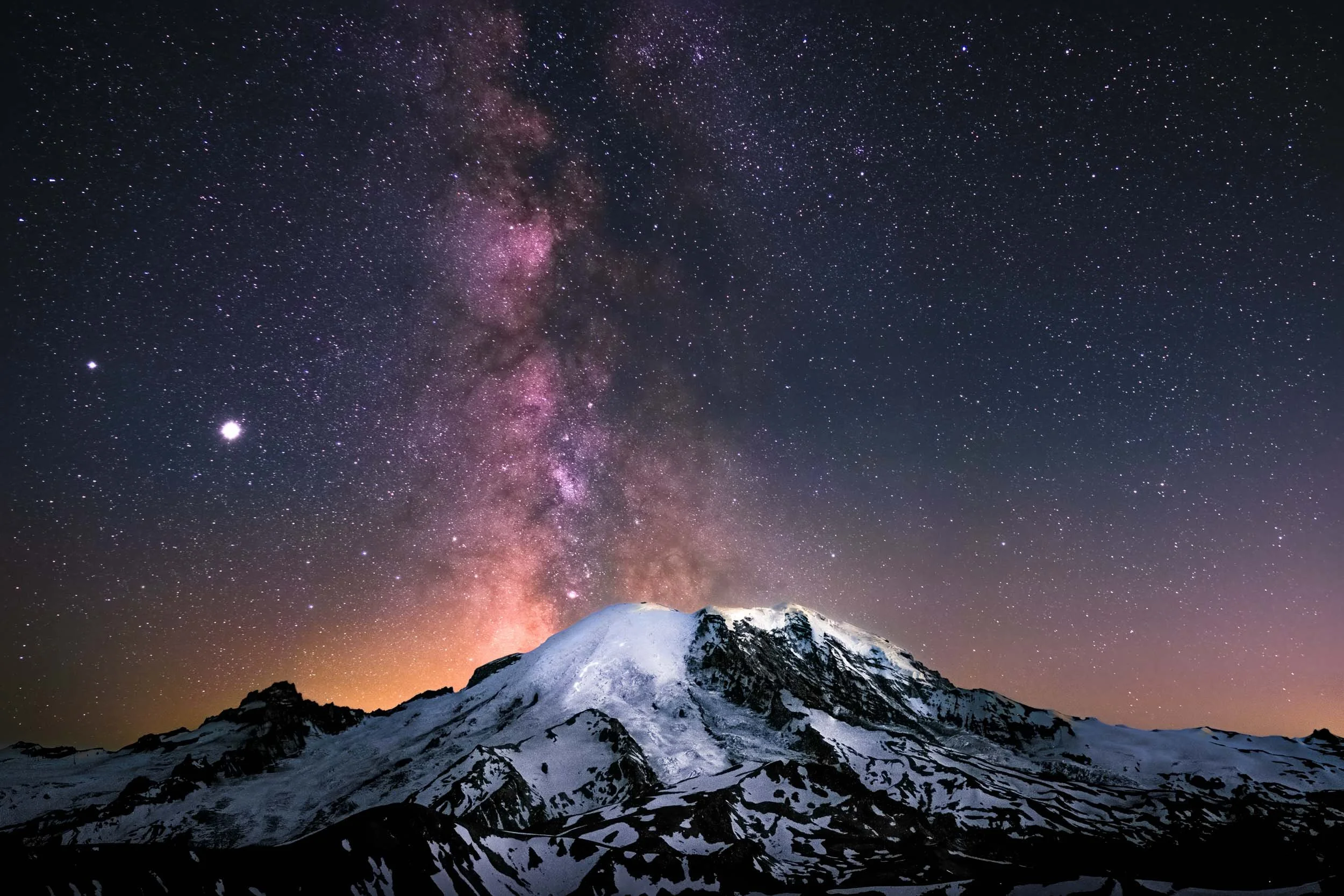
Mount Rainier under a blanket of Milky Way stars - July, 2020.
Even though aspects of the weather were unideal for human comfort, it was an amazing evening! Mike and I had many conversations about photography and life. We had fun exploring the different types of photos we could take, and by the time sunrise came around, the wind was gone.
One of my favorite photos of this adventure came just before sunrise. Pre-dawn light showed soft burnt color over the cascading hills as the slightest sliver of the moon rose over the horizon.
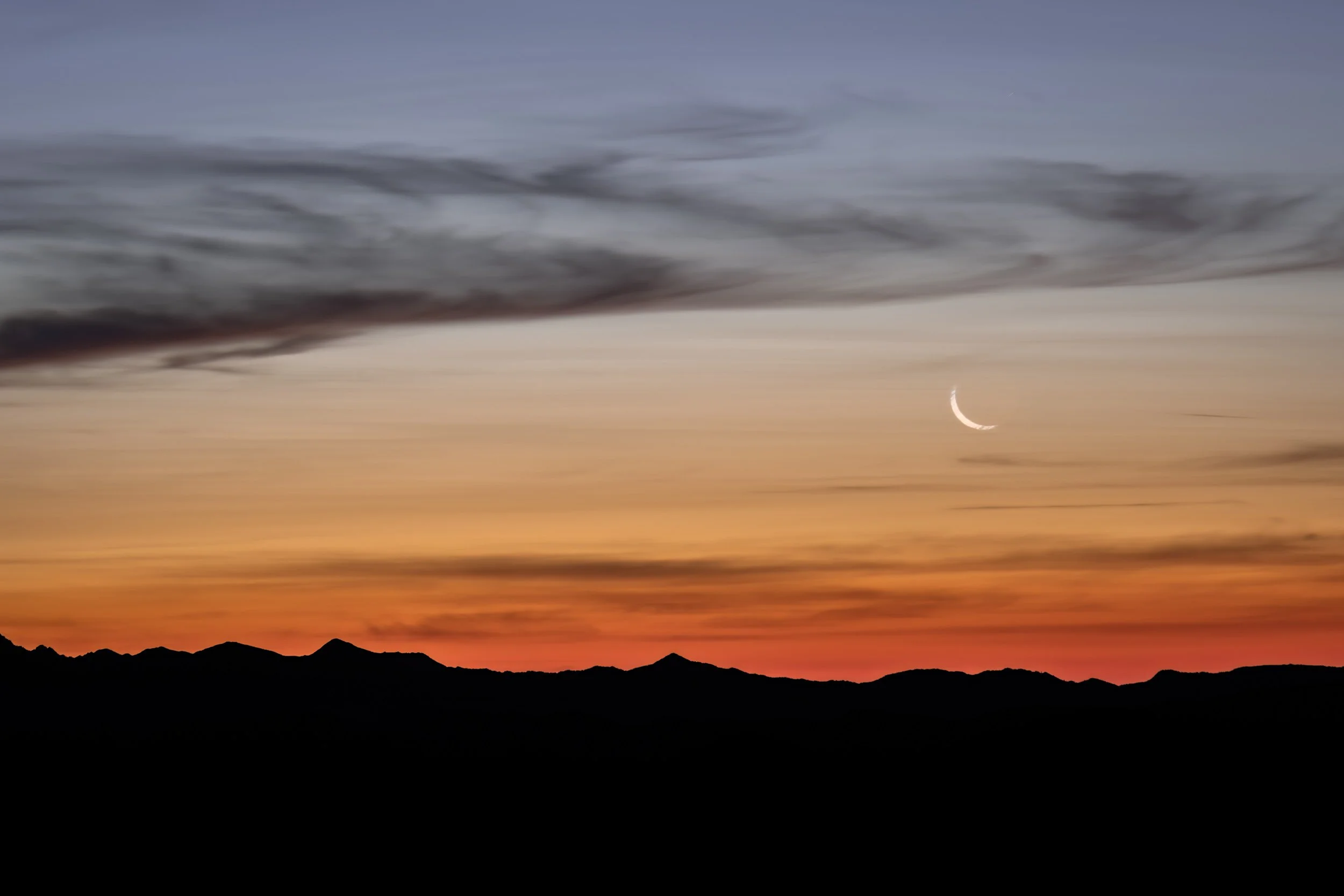
Pre-dawn light silhouetting the moon and the mountains - July, 2020.
The sunrise came and went. We packed up our gear and headed back towards the parking lot. Only a few hundred yards from the trailhead, a Cascade Red Fox crossed our path! I only had a short lens on my camera, so I wasn’t able to get a close-up of her, but it was a very fun moment regardless.
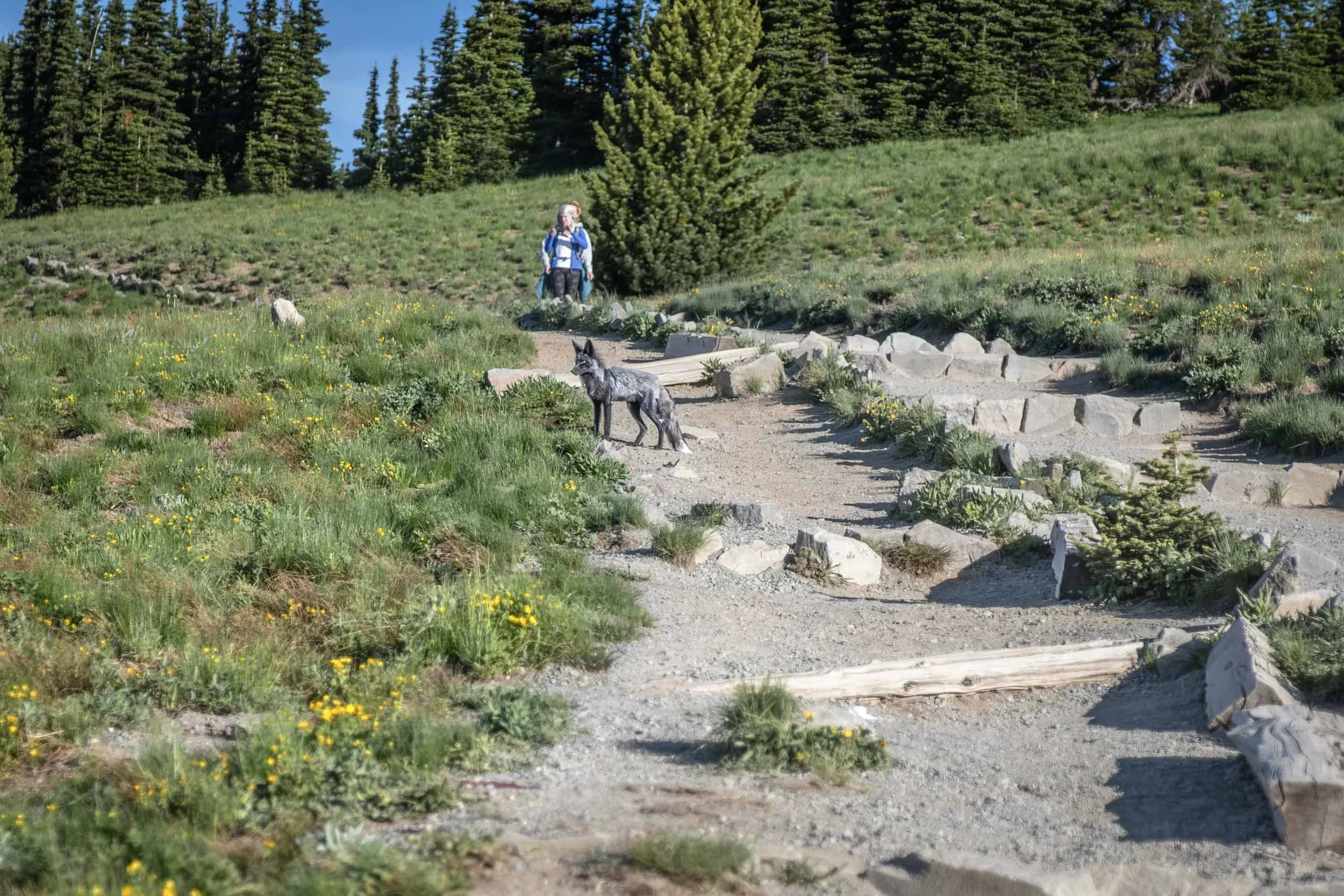
A Cascade Red Fox crossing the trail - July, 2020.
I’ve braved many inclement weather situations over the years; this one was pretty mild ;) Either way you slice it, a friend makes the going easier.
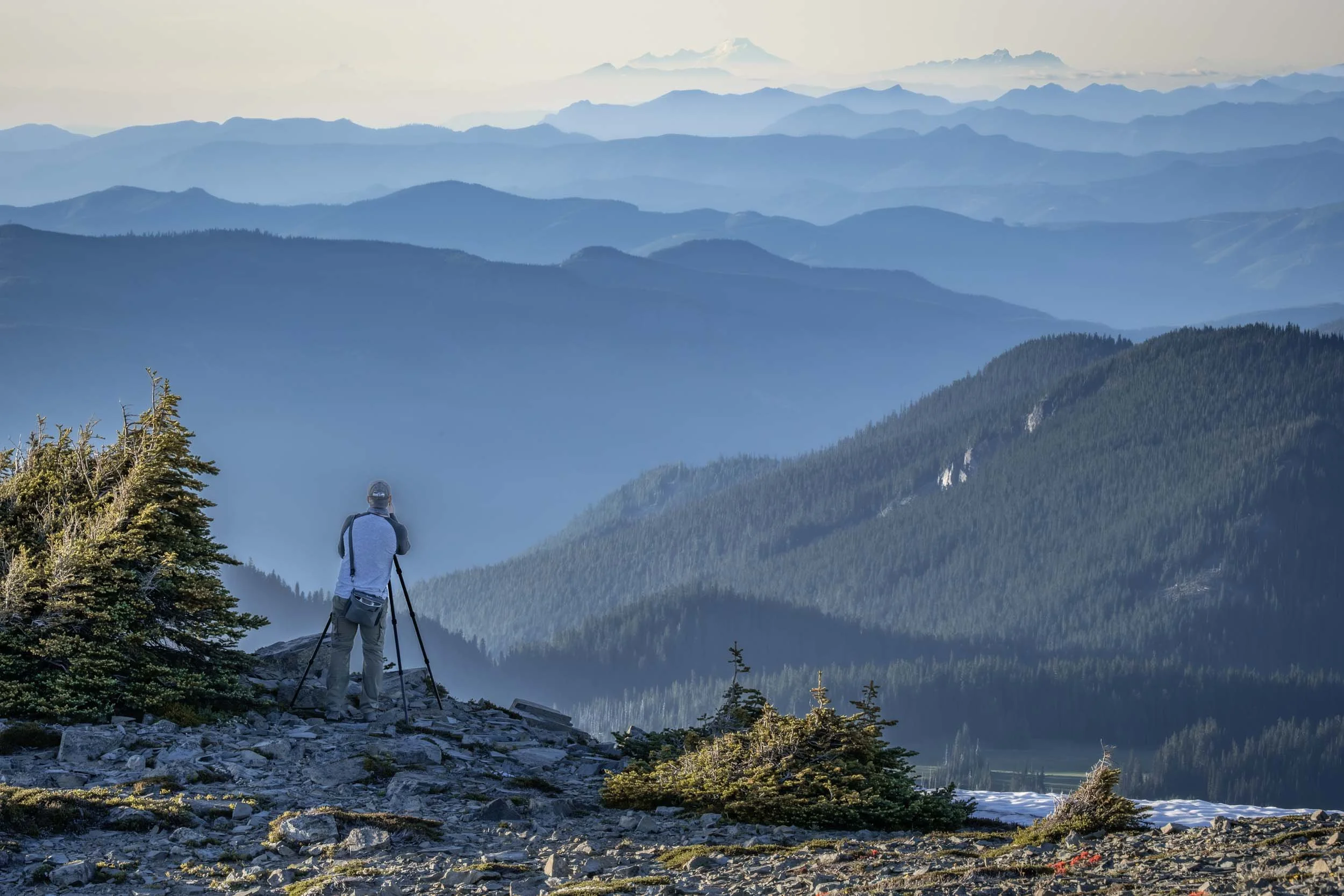
Michael Goodwin Photography - July, 2020.